Strong savings culture among young people
Key findings
- 78% say being in control of their finances positively contributes to mental health, up from 70% last year.
- 73% say they regularly put money aside for savings.
- 84% say saving is very important to them and 90% say there are a considerable number of benefits to saving money.
- 56% are interested in investing, but only 30% feel confident they understand investment products.
- Friends, family and having money to save and spend are the main drivers of happiness.
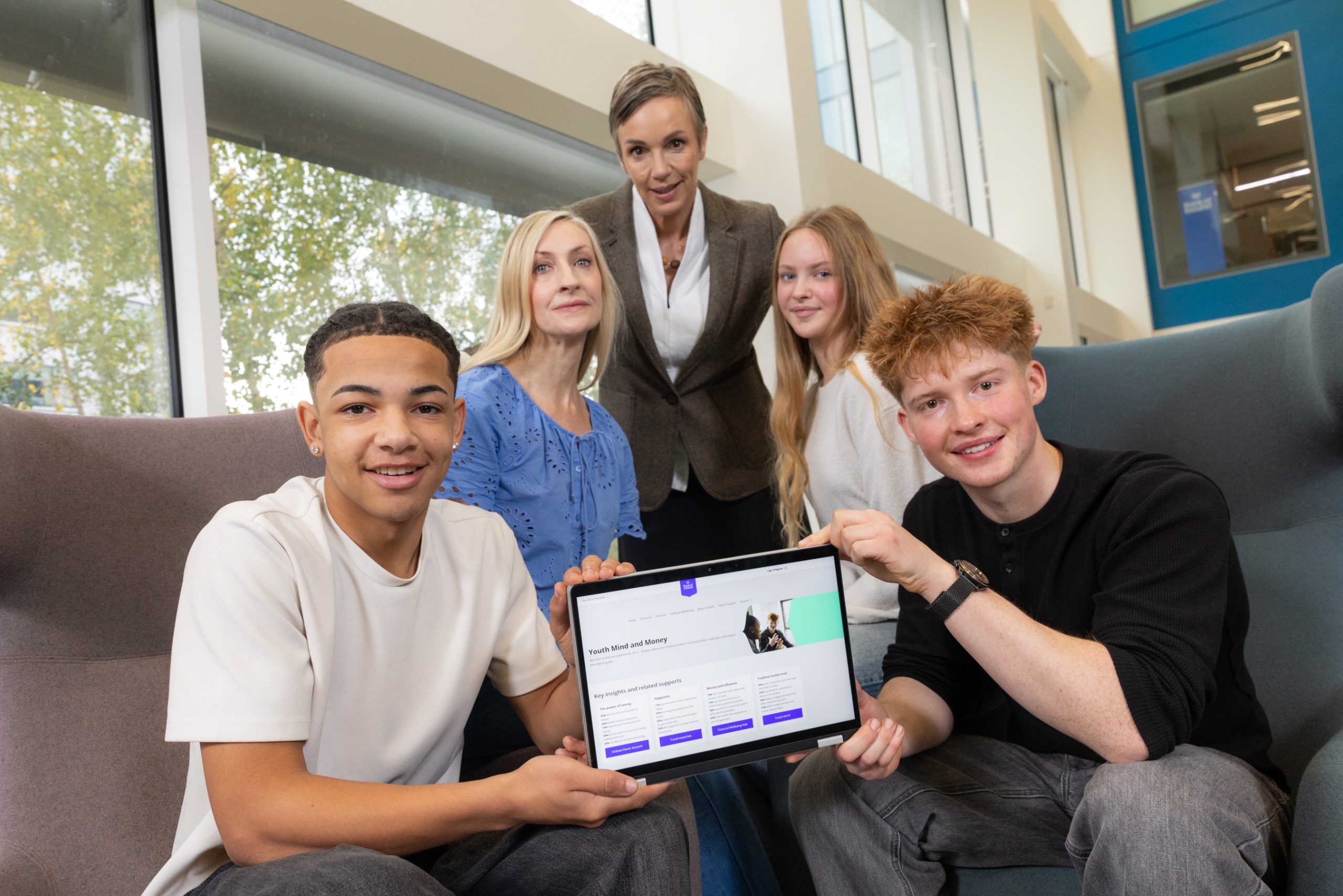
20 November 2026: Young people in Ireland are becoming more optimistic about their future, are increasingly saving and recognise the importance of financial wellbeing to their personal wellbeing, according to Bank of Ireland’s ‘Youth Mind and Money Research 2026’.
Now in its second year, the research, conducted by Ipsos B&A among 526 people aged 13-30, highlights some interesting changes compared to 2025. Optimism about the future is rising, with 61% of young people saying they are optimistic in 2026 versus 57% in 2025. Financial wellbeing is increasingly connected with personal wellbeing, with friends, family and having money to save and spend among the most important drivers of happiness.
The research highlights a growing connection between financial wellbeing and mental wellbeing, with 78% of young people agreeing that being in control of their finances contributes positively to their mental health, up from 70% last year. When asked what success/prosperity looks like to you, 59% said being healthy, 56% said having freedom, 55% said having a secure job and 53% said owning a home.
The findings also reveal a strong culture of saving among younger generations. Nine in ten young people believe there are a considerable number of benefits to saving money, 84% say saving is very important to them and almost three-quarters (73%) regularly put money aside, up from 64% last year.
While interest in investing is growing, confidence remains low. More than half (56%) say that investing is an area of interest, yet less than one third (30%) feel confident in their understanding of investment products. Almost seven in ten (69%) say the possibility of losing money discourages them from investing. Males (47% for males vs 28% for females) are more likely to have sought online/social media investment advice, an increase on last year (42%). There has been a distinct move away from Crypto (2025: 36% / 2026: 16%) and property (2025: 23% / 2026: 8%) investment towards stocks – 59% have investments in stocks, up from 47% last year.
Commenting on the findings, Conall Mac Coille, Group Chief Economist, Bank of Ireland, said: “Recent CSO data show Ireland’s household savings ratio at 20% is the highest in Europe and our Youth Mind and Money Research reveals the savings culture is strong with the younger demographic. Close to four in ten survey respondents indicated that saving money is important for them – that matters economically as well as socially. A generation that develops strong saving habits early in life is better placed to absorb financial shocks and plan for major life events.
“Ireland may be a country of savers, but we still have a lot of work to do to become more mature investors. Cognisant of the rollout of the new Investment Accounts next year, the survey highlights the role for educating Irish savers on investing. The room for improvement is clear – less than one in three indicated they felt confident in their understanding of investment products and half would be more likely to invest with better access and understanding of investment products. Worryingly, four in ten had sought investment advice online, or via social media, rather than from professional financial advisors.
“A striking feature of this youth survey is a move away from crypto assets, with participation more than halving from last year to this year. 82% agreed with the statement it is possible to lose a substantial amount, or all, or my money when investing in cryptocurrencies. Young males appear to be more at risk of falling foul of ‘get rich quick’ schemes – they are more likely to seek investment advice online and three times more likely to have invested in cryptocurrencies than females.”
Dawn Bailey, Head of Customer Segments and Financial Wellbeing, Bank of Ireland said: “The research highlights how younger generations think about their finances in a fast-changing world. Young people are viewing their financial futures with confidence and optimism, even as they navigate pressures around money, social media, AI and a complex financial world. The challenge now is to ensure that young people are supported by the appropriate guidance and support needed to make sound financial decisions as they navigate the various life stages. Good savers tend to be good investors, so there is an opportunity to harness the strong culture of saving in Ireland to drive a strong culture of investing.”
Ends
Note to editor:
About the research
The Bank of Ireland Youth Mind and Money Research was conducted by Ipsos B&A among a nationally representative sample of 526 people aged 13-30. Fieldwork took place between 31 July and 19 August 2026. For more information visit boi.com/youthmindandmoney